
 Call Us :- 07971190499
 Send Inquiry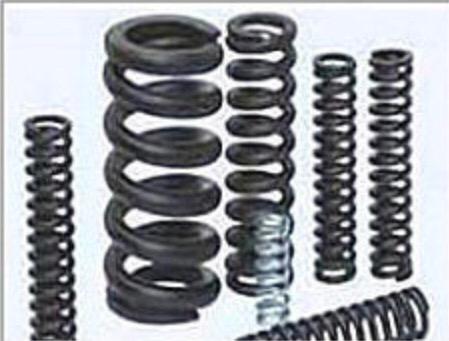
Steel Wire Compression Spring
50 INR/Piece
Product Details:
- Style Spring
- Usage Industrial
- Load Type Compression
- Material Stainless Steel
- Color Black
- Click to View more
X
Steel Wire Compression Spring Price And Quantity
- 10000 Piece
- 50 INR/Piece
Steel Wire Compression Spring Product Specifications
- Black
- Stainless Steel
- Compression
- Spring
- Industrial
Steel Wire Compression Spring Trade Information
- 1000000 Piece Per Month
- 1 Week
Product Description
A steel wire compression spring is a type of mechanical spring that is made from a helical coil of round steel wire. When a force is applied to the spring, it compresses or shortens, and when the force is released, the spring returns to its original length.
Compression springs are used in a wide variety of applications, including in automotive suspensions, industrial machinery, and consumer products such as pens and toys. They are designed to provide resistance to force or pressure and to absorb shock or vibration.
Steel wire compression springs can be made in a range of sizes and shapes to suit specific applications, and their strength and resilience can be adjusted by changing the diameter of the wire or the number of coils in the spring. They can also be manufactured with different types of ends, such as closed or open ends, to allow for different methods of attachment to other components.
The manufacturing process for steel wire compression springs typically involves coiling the wire around a mandrel or cylinder to create the desired shape, and then heat treating the spring to increase its strength and durability. Quality control measures are used to ensure that the springs meet the required specifications and will perform reliably in their intended application.
Overall, steel wire compression springs are a versatile and essential component in many mechanical systems, providing reliable and consistent performance under a range of conditions.
Robust Stainless Steel Construction
Manufactured using stainless steel, these compression springs offer exceptional resistance to corrosion and wear. Their sturdy build supports heavy industrial operations, making them ideal for various mechanical and structural applications. Each spring undergoes rigorous quality checks to ensure consistent performance and durability.
Precision Engineering for Industrial Use
Engineered for precise compression and resilience, these springs are integral to spring clamps in industrial machinery. Their design maximizes load capacity while maintaining a compact structure, providing reliable and repeatable performance in demanding conditions.
FAQ's of Steel Wire Compression Spring:
Q: How is a stainless steel compression spring used in industrial applications?
A: A stainless steel compression spring is typically used to absorb and store mechanical energy in industrial machinery. It assists in providing the required resistance and returning to its original shape after being compressed, making it vital for spring clamps and similar components.Q: What are the advantages of using black stainless steel compression springs?
A: Black stainless steel compression springs combine the corrosion resistance of stainless steel with a protective black finish, enhancing their longevity and resilience in harsh environments. This ensures durability and reduces maintenance requirements.Q: Where can these compression springs be installed within industrial equipment?
A: These springs are commonly installed within spring clamps and other mechanisms where controlled compression and restoration are necessary, such as in assembly lines, manufacturing equipment, and heavy machinery.Q: What is the process for manufacturing stainless steel compression springs?
A: The process typically involves coiling high-grade stainless steel wire to precise dimensions, followed by stress-relieving heat treatments and surface finishing, such as black coating, to enhance strength and corrosion resistance.Q: How does the structure of a spring clamp benefit from these springs?
A: The spring clamp relies on the spring's ability to exert precise compressive force. The robust structure ensures secure clamping pressure, beneficial for holding items firmly and safely during industrial processes.Q: When should maintenance be performed on these compression springs?
A: Regular inspections are advised for these springs, especially in high-load or critical applications. Maintenance should be performed if wear, deformation, or loss of elasticity is observed to ensure continued safe operation.Tell us about your requirement

Price:
Quantity
Select Unit
- 50
- 100
- 200
- 250
- 500
- 1000+
Additional detail
Mobile number
Email

Other Products in 'Compression Spring ' category


We deal only in bulk quantity orders.
Contact Details
- Plot No. 52, Khasra No. 665, Nawada Ind Area, Uttam Nagar, New Delhi - 110059, India
- Phone : 07971190499
- Mr. Vinay Kumar (Partner)
- Mobile : 07971190499
- info@svrauto.in
SVR Auto Industries
GST : 07ABSFS3475N1Z8
GST : 07ABSFS3475N1Z8
- Unit -2 :- 208 2nd Floor JMD galleria Sector - 48 Sohna Road Gurugram Haryana -122002
 Send Inquiry
 Send SMS
SVR AUTO INDUSTRIES
All Rights Reserved.(Terms of Use)
Developed and Managed by Infocom Network Private Limited.
Developed and Managed by Infocom Network Private Limited.

